A Discussion About the Fundamentals of Punk and How We as a Community Uphold Them
by Chris Ponds
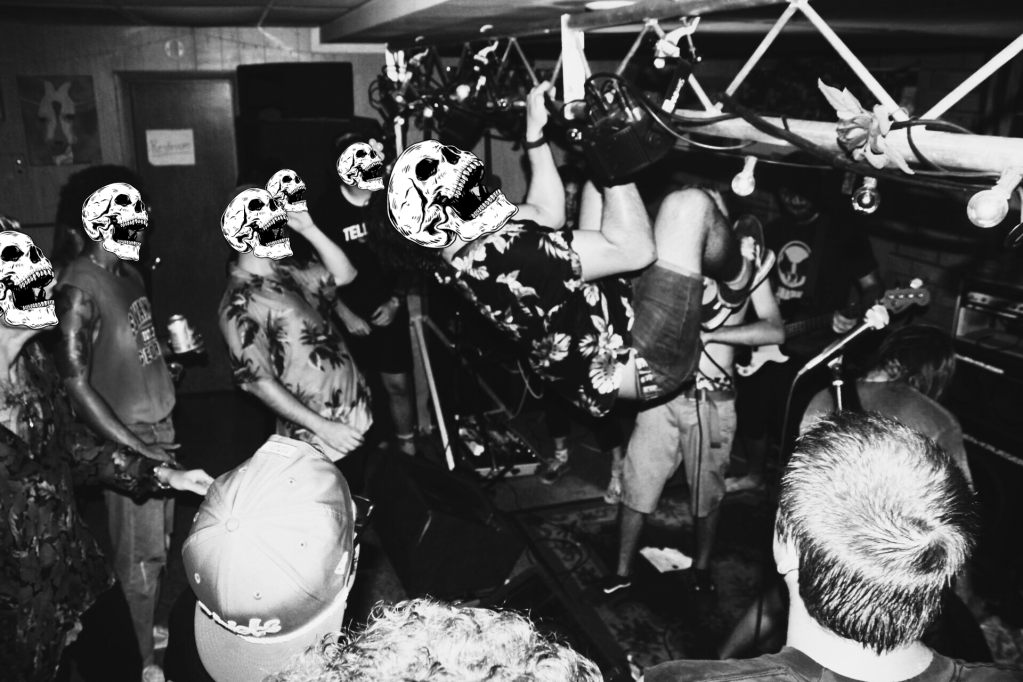
I laugh it off with the other women and AFAB people I meet at shows with jokes about being on “pit patrol,” or being forced to find a big guy to stand behind or just accepting that your glasses may break that night. Sadly the real fears derive from the oversaturation of direct physical assault by musicians, coercion of underaged girls, unsolicited nude pictures, and inappropriate comments/language in the DIY music scene. The promiseland of punk we were delivered was an inclusive community for outcasts, yet history shows time and time again that this space has been turned into a playground for white male angst and a platform for pure bigotry. Despite Punk/ DIY music spaces promoting a sense of community within a safe space where freedom of expression is encouraged, the access to this experience has been limited for people of color, women, and LGBTQ people since it began. The same cannot be said for everyone else.
Countless stories, at all levels of success, examining how label owners, venue owners, band members, and show bookers are being outed as abusers, racists, rapists, and groomers have created a toxic mindset of “well it’s always been this way, but things are getting better.” The sad irony of this is that the punk scene was pioneered by those most abused and excluded. Black punks like the bands Death and Bad Brains’ lyrics display drivers of the fundamental ideology of punk’s culture of being, anti-fascist, anti-racist, anti-consumerist, ultimately anti-establishment. Queer people and women like Jen Smith, credited for coining the “riot grrrl” subculture of punk, helped form the foundation for what we know as punk. These groups all progressed punk’s many subgenres, each of which were formed out of a need to create spaces that reflected the diverse lives of punks that were excluded. In the 1970’s when punk first came to fruition, it was a reaction from the powerless people that found the hippie movement to be fruitless and lacking in true action. British and American Punk on the West and East Coasts laid a foundation through the 70’s and 80’s that would eventually bring us to Metal and American Hardcore. This would be the time of the landmark venue CBGB’s. In an article from the online publication Colorlines, Lindy West dissects Lester Bang’s book White Noise Supremacists by explaining:
“Early ’80s CBGB’s scene in New York City, a scene which has been posthumously hailed as a high point for racial harmony in which punk, rap, reggae, and new wave all came together. Bangs describes it less charitably as a place where white punks rebelled against everything, and quickly forgot why they’d gotten started. The result? What he refers to as “racist chic,” the employing of swastikas and epithets to get a rise out of some authority or other, and the resulting deeply homogeneous scene that offers no trouble to the actual-racist CEOs of the record industry.”
All of these racist acts intersect with harmful acts toward women and queer people. These are not separate issues. These are issues rooted in self-glorification paired with self-hatred, as we learn from Bangs in his book: “This scene and the punk stance in general are riddled with self-hate, which is always reflexive, and anytime you conclude that life stinks and the human race mostly amounts to a pile of shit, you’ve got the perfect breeding ground for fascism” (“White Noise Supremacists”).
This attitude that Bangs is referring to is a huge reason n why punk has been against itself since it began. Various subgenres have stemmed from punk into the modern day now and yet each DIY scene I have experienced have a couple things in common: angry men seeking to let out aggression, passionate good people that do genuinely care about music and community, and full-on predators. I say this from my own personal experiences attending local and semi-local shows since I was 13. It’s hard not to stay defensive when communicating with anyone mildly new I meet at a show. I am typically a talkative, bubbly person, yet at a show—a place I should feel most free to have fun—there is always an underlying feeling of fear that overwhelms any bit of fun I am allowed to have. I did not dissect my actions over the last 15 years that way: I drank and smoked and coped in my own ways to deal with the apprehensive feelings that took over.
Looking back, I see how I didn’t always make the greatest choices for my own safety by driving hours away to house shows with strangers I’d met on Twitter. I am thankful for the friends I had and how we looked out for each other but it should be noted that we, young and naive at best, believed these strangers to be our friends. Strangers that were sometimes men incredibly too old to be driving us to another random college guy’s living room. Being hit on by older men made us feel good when we were at such vulnerable and insecure ages. No one could warn us enough to make any sort of difference. We simply were just “mature for our age” and “cooler beyond our time.” These adult interactions between men anywhere from 18-27 and us 13-17 felt like a fun, sexy thing to all of us. Now as an adult, speaking for myself, it is wild to think about being my age now, 27, pursuing someone as young as even 22-23. I think it is easy to put people on a pedestal when we are that young and that is the first door opened to someone abusing a sense of power they think they have over a more vulnerable party.
We see this in various cases, such as stories like Lydia Night from The Regrettes calling out SWMRS drummer Joey Armstrong and the women that bravely called out the popular band Brand New’s lead singer Jesse Lacy. These were, of course, big label names being thrown around but the behavior does not end at the A-list, unfortunately. Praising the participation of popular and local celebrities alike can lead to a snowball effect of people dismissing their actions because they are perceived as beloved, charismatic, and socially praised. I have seen time and time again people too scared to speak up because, “Everyone loves them, no one will ever believe me.” To me this is where it is up to each community member to hold their friends/peers accountable. Vetting your friends and maintaining a standard of not excusing abusers is a first step to creating a safer community. Learning about these big band members doing the same things to young women that I experienced in high school from no-name men did not make me feel better or less alone. It makes me angry to think that these people have such an ego about themselves to think they can do these things without reprecussions. Both women who came forward with accusations against Jesse Lacy described the aftermath of the abuse they experienced as having a “distorted sense of intimacy and struggled with healthy relationships.” This story and others like it all seem to have witnesses that say the victims tried to tell them what was being done to them or they saw weird actions and did not think further into it. This is where experiences of mistreatment towards People of Color, LGBTQIA people, and women all intersect at a solution that we often preach about and never actually follow through on: accountability.
We are the only ones who are ever going to change the scene, so we have to be active and intentional about accountability. Only we can silence ourselves; no one has real power over us to stop us from being involved and loud about the community we hope to build. As far as inclusivity, this starts with each of us unpacking our biases towards those we see as different from us and from there, begin to discover what similarities we have. When we take the time to actively hear our peers in this scene, as well as, give credit to the excluded peoples that contributed to creating this subculture, we will then be able to take real action for them. I get that it doesn’t seem cool to care and standing at the show, armed-crossed, face stoic, and silently watching seems like the standard, but that fear of judgment really holds us back from true connection to one another. This is where we hit our wall that causes us to keep the scene in the same systems of erasure that the world runs on, but truthfully the most punk thing you can be is kind.


 Immersed Zine
Leave a comment