By Ben Matthews | Photos by Mary Riley
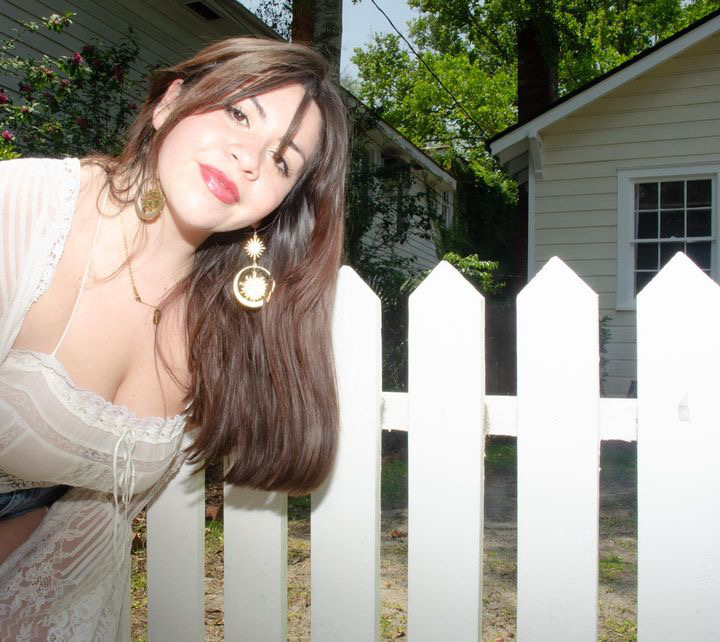
“A person does not lightly elect to oppose his society. One would much rather be at home among one’s compatriots than be mocked and detested by them.” In his own musings on the influence of walking amongst a world where hostility is endlessly abounded, James Baldwin surmised the grave complexity of one making a comprehensive denouncement of their life. Where does hate arise from if not from the desire to be loved and loving? What follows a retreat from that noble yearning and what does it make of us? In her newest song, “Bad Again,” Wilmington musician Madison Grifaldo, under the artist name Madisinn, explores the turbulent, conflicting atmosphere that arises internally as she traverses the divide between a space of mind allowing the undisguised transmittance of true desire and the opposing forces, shrouded in fear, that besiege any advance of the life’s fluorescence.
“I don’t hate my life/ I hate the world,” the opening lines of Bad Again, and subsequently the rest to follow, are arranged in couplets laced with contradiction, where rhyme and reason are corrupted with each unassured avowal. This first line was born from an impassioned telephone conversation Madisinn had with her mother following a series of grievous events resurfacing from a former life. The line lingered upon her mind incessantly, leading her to write the song, in her own words, “in about 10 minutes.”

Continually approaching this song and making successive returns, however inconsistent, drew me to its power in painting vivid strokes of the habitual damnation of the soul; its movements spell the building of internal walls. “It’s very simple to say, but it holds a lot of weight in itself, and that’s the symbolism of the walls, and I never really thought about this song as a song about walls, but it really is. It most definitely is. That negative part of myself that I used to keep myself away from negative spaces in the world,” in conversation with Madisinn about her latest release, she spoke to the recognition of the emotional impulses that led to Bad Again’s creation and the overarching fears and anxieties that drew her inward. Madisinn takes up this song as a megaphone, armed with her lavender and velvet lullaby voice, aiming it to the skies above as she enumerates the animosity felt towards the world she wants to love, but has watched grow colorless. She etches her grievances in pencil, with trembling hands, onto the bricks she stacks into her blockade. Madisinn decries the violence in men, the disheartening escapism of her phone, the loss of control found in the call to the bottom of a bottle, a society riddled by the advances of ignorance and apathy, all interwoven by the dire dissolution of love from luminous liberation to fragile mockery.
“I don’t want to confuse boundaries with walls. Walls you put up to hide yourself from the world, and I don’t want to hide myself anymore,” While the song’s lyrical substance holds the prophecy of entrapment by walls, I think there is a profound, emancipatory magic found within the full history of this songs conception and transformation. Bad Again is a return, a rerecording, a re-establishment. Madisinn described coming back to the song, “I just wanted to redo it and give it life again, give it a new perspective, and let myself feel all of those feelings and not let it boil up inside.”
Originally, Madisinn had released the song as a somber acoustic track entitled It’s Getting Bad Again. The original is an organically rough, battered cry from the base of towering walls. It’s Getting Bad Again is raw in its vulnerability, constructed by the crude isolation of Madisinn stuck inside her bedroom, alone, save for her acoustic guitar, which echoes from corner to corner, ensnaring her despair and growing resentment. With the help of Max Agee and Marc Fatum, the rerecording is a holistic elevation of both the sonic weight and emotional impetus that, as Madisinn says, gives the song a new life. There is a clarity found in the new production that seems to be ushered in by the necessity to reclaim her autonomy. The track is given an augmented electric feel: the synth progressions, the steady wandering of the low-end, and the spirited guitar interjections, supply a more complex dynamic behind Madisinn’s voice. Her voice, though still encompassing a solemn tone, is now empowered to a fuller scope of inflection where one gets a more vivid illustration of her ability. A biographer once described Jeff Buckley’s voice as “deeply corporal and completely ethereal,” an arena I would have no problem placing Madisinn in as it speaks to the actualization of her voice as not only the honing of a gifted bodily instrument, but also as a force capable of enlivening both her own soul and each member of her audience’s towards some transcendence.
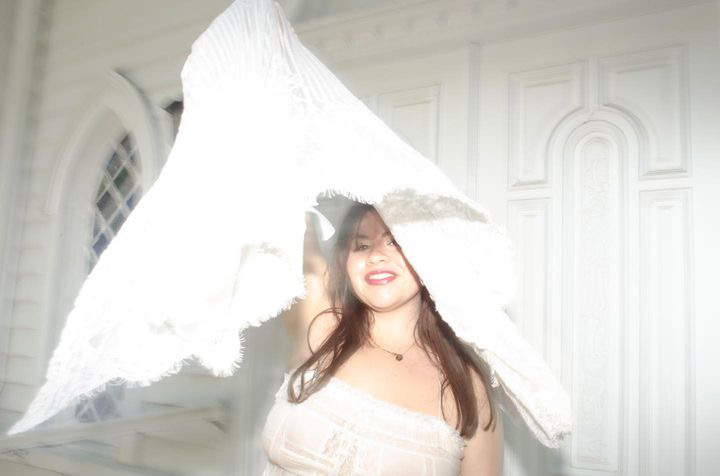
Bad Again is an act of resistance, an unflinchingly honest grappling with the questions: If this is my loneliness, What will I make of it? What will it make of me? Bad Again is the act of turning stone walls to glass, to be seen in the truest image of yourself before shattering the walls and stepping into the bright sky of a clear day and embracing the walks of life around you in an affectionate grasp. Ultimately in Bad Again, Madisinn stands on the shore of her life’s reflecting pool, staring sloe-eyed as tears fall into the waters below, rippling the faces of her many beloved, her own mirrored among them, and singing her own prophetic tale of a tomorrow shrouded in a hopeful promise.


 Immersed Zine
Leave a comment